
From Skipping Baths to Avoiding Injuries: The Origins of Filipino Holy Week Beliefs
And why do they persist in modern times?

(SPOT.ph) "Bawal maligo kapag Biyernes Santo kasi patay si Hesus." Filipinos living in the only predominantly Catholic nation in Asia would have heard this at some point in their lives, particularly every Holy Week. But have we ever asked why this is so, and why do they persist in modern times?
These beliefs and practices stem from the combination of the country's rich culture and religiosity that shape our communities. By delving deep into how these practices came to be, we can understand how Filipinos integrate their indigenous culture with their Catholic beliefs.
To help us understand these beliefs and practices, SPOT.ph tapped parish priest and canon law student Ritz Darwin Resuello, and anthropologist and University of the Philippines Los Baños professor Christian Rosales for this explainer.
Also read:
WATCH: Pre-COVID Holy Week Traditions, Explained
10 Things We Used to Do During Holy Week
Where do these Holy Week practices and beliefs come from?
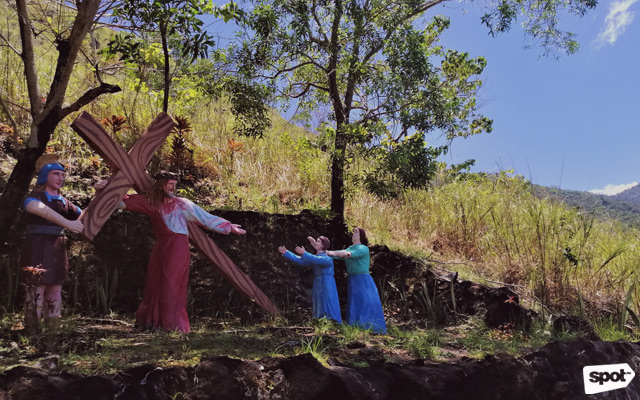
Self-flagellation, crucifixion to the cross as part of penitensiya
During Holy Week, some Catholic faithful seek forgiveness for their sins by performing penance (penitensiya), specifically by walking barefoot and flogging themselves in public. A few will even go as far as crucifying themselves to the cross, a reenactment of Christ's crucifixion on Mt. Calvary.
Let's go back to what penance really means: these are practices to pay for one's sins and to help the faithful discipline themselves so they wouldn't fall for the same sin in the future, said Resuello. By doing so, the faithful are one with Christ's suffering on the cross.
Self-flagellation and crucifixion fall under mortification, or to "kill" (not literally) one's self by inflicting pain or discomfort as atonement. These two, however, aren't endorsed by the Catholic church. While penance has a physical aspect, it shouldn't be fatal or unhygienic, he said.
"Ano magagawa ng Simbahang Katolika tungkol dito? The only thing we can do is to form the people doctrinally on the true meaning of mortification and penance, but to go the streets and tell them to stop having themselves flagellated or crucified would be difficult. We don't have police power to do that."
"All we can do is to appeal to their conscience, to form them doctrinally, and to tell them that they don't have to do it. Jesus died for us already; He has shed his blood for us already. What we have to do is to incorporate our sufferings—which need not be fatal—in his."
Culturally though, the shedding of blood signifies a "rite of passage" from being a sinner to a renewed individual, and blood-based rituals such as this have been practiced all around the world, said anthropologist Rosales.
"Penitensiya, although a local community-based Christian religious practice, resonates from how indigenous communities understand the value of transition. Thus, even if local parishes gradually ask the faithful to refrain from practicing it, it persists on the basis of its grassroots meaning: a potent way to assume a different self through blood."
Fasting on Good Friday, going meatless every Friday
Ever wondered why Fridays are monggo days? It's not just for your balik-alindog diet. Going meatless all Fridays of the year is part of the Catholic practice of mortification. Catholics aged 18 to 69, as long as they don't have any illnesses, are also called to fast every Ash Wednesday and Good Friday.
Why every Friday? "Because on that day Christ suffered in the flesh and died for our sins," the U.S. National Conference of Catholic Bishops said.
Going meatless also has its cultural roots, although it's not limited to Holy Week, according to Rosales. In indigenous communities, meat is a symbol of prestige, and only key individuals in the community (i.e. elders) get to feast on the most important parts of the game like the liver. In some parts of the world like Europe, only the wealthy can afford to buy meat—that's why it's linked to milestones and celebrations, and why we Filipinos shell out a fortune to gorge on lechon during momentous events. Avoiding meat "is making solidarity with the marginalized in society," the anthropologist said.
Keep the noise down during Holy Week
Have you ever asked why we're supposed to stay silent during this Holy Week? Remember that during Holy Week, the faithful all over the world remember the death and resurrection of Jesus Christ for it is the basis of the Christian faith. At a time of grieving, specifically from Good Friday to Black Saturday, silence is a form of respect for the dead, said Rosales. Take note, though: Silence is not the absence of noise.
"Silence is a mixture of different expressions of grieving, such as crying, whining, wailing, chattering about the cause of someone’s death, celebrating the life of the dead, or the sound of prayers over the dead," he said.
During this time, the faithful are to reflect on the "suffering, death, and resurrection of the Lord," said Resuello.
"[Christ's] death celebrated on a Good Friday is marked by a series of grieving expressions: the way of the cross, pasyon chanting, funeral among other forms of expression is deeply rooted in the Filipino funeral practices. Hence, the overarching expression of respectful ways of attending a funeral takes fullness in silence," said Rosales.
Avoid bathing, staring at mirrors during Holy Week
These practices are still related to funerary taboos, Rosales added.
It is also part of disciplining the body which is easily stimulated by worldly pleasures like vanity, Resuello said. This practice, however, is not in the Bible or part of Catholic doctrines.
"Bathing gives comfort to the body. Looking at mirror may be form of vanity. Through these, the spirit of mortification may be lost. But then again, that's only an appropriation. Hindi naman talaga pinagbabawal ng Simbahan ang maligo at tumingin sa salamin. Pero kung iiwasan sa diwa ng sakripisyo, wala rin namang masama," the priest explained.
"In itself, fasting and other means of legitimate mortification is good. It becomes bad only if done just to please people, just to earn high human regard."
Avoid getting injured on Good Friday
It's only natural for us to protect ourselves from harm 24/7, but why, specifically, are we told to avoid getting injured on one specific day of the year?
From a cultural perspective, it shows Filipinos' innovation of accommodating both indigenous and spiritual worldviews, said Rosales. Indigenous and local communities believe that any wound or opening in the body could be an entry point of evil forces. The anthropologist cited the scholar Richard Lieban who said that in Cebu, a wound that does not heal could be an indication of sorcery. The remote community of Tau-Buhid Mangyan in Mindoro also believes that wounding oneself accidentally can also be a signal of possible witchcraft. The only way to appease the powers that be is to offer sacrifices.
Remember how Catholics mark Good Friday as the day of Christ's death? Jesus is the "lamb" sacrificed, and on the symbolic day that he is dead, "human-controlled spirits and agentic spirits roam around, wrathful and could harm anyone at will."
"Such harm could enter the body through a wound. So one must be careful not to get wounded/injured until such a time the 'sacrificial lamb' could become available," said Rosales.
While the commemoration is symbolic, an excess in interpretation paved the way to this superstition—which isn't part of Catholic doctrine, said priest Resuello.
Don't travel during Holy Week
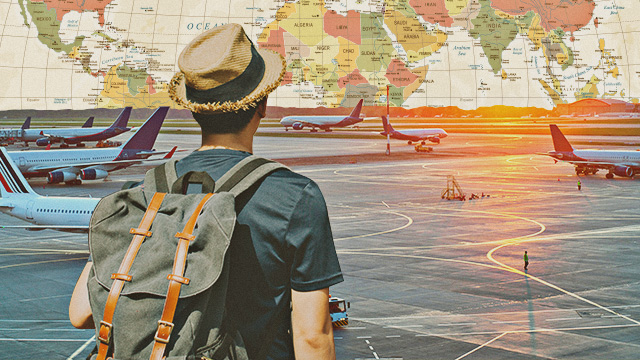
Holy Week is a long weekend in the Philippines, moreso this 2023 when the Philippine government declared that April 10, Monday is also a holiday. During this five-day long weekend, work-weary Manileños drive, fly, or sail out of the capital for much-needed rest and relaxation. So why are we told not to travel during this season?
It's still related to the death of Christ as commemorated during this week. When somebody you love dies, traveling for leisure can be disrespectful, Rosales reminded.
"I would say it resonates from the indigenous practice of some Filipino communities like the Tau-Buhid. Among the Tau-Buhid, when someone dies in a household, the members of [the] house are confined in the vicinity of their community, and they may not even be allowed to visit their swiddens until the funerary observances/grieving is over," he said.
For Resuello, Catholics traveling during the Holy Week isn't bad per se. If traveling hinders a Catholic faithful from attending liturgical activities, it's best to postpone, he said.
"Traveling itself is not bad so long as it does not hinder us from meditating on the suffering, death, and resurrection of the Lord and it does not bar us from participating in liturgical activities."
Using palm fronds as charms or amulets
On Palm Sunday, Catholics hold palm fronds to mark the beginning of Holy Week, the last week of Lent. It's to commemorate how Jesus was welcomed into Jerusalem as Jews saw him as the promised Messiah or the savior. These palm fronds will eventually dry up and will be used to make ashes for Ash Wednesday, a full circle to this symbol of Lent.
Due to its association with Jesus' triumphant entry to Jerusalem, some would see these palm fronds as a charm or amulet for protection and good fortune. For priest Resuello, this belief shows the lack of understanding of what these palm fronds represent.
"Ano tingin natin sa palaspas? Magbibigay lang ba ng suwerte? O mas malalim na tanong, ano tingin natin kay Hesus na sinalubong ng mga may hawak ng palaspas? Maka-materyal o maka-temporal pa rin ba gaya dati? Remember that as Jesus enetered Jerusalem, he was hailed a temporal leader that would initiate revolt against Rome. But he his more than that. He is the Savior of the world from sin and death."
For anthropologist Rosales, this shows a palm leaf transformed into a sacred symbol as interpreted by some community of believers.
"Sympathetically when one is like an ordinary palm leaf which is detached from the “tree” so too one will eventually die. But when one is with Jesus, welcoming Jesus reminded by the waving of the palm when it is blessed in the Church so too one will not die."
Why do these Holy Week beliefs persist?
While there are Holy Week practices in line with Catholic doctrines, the reason why some superstitions exist is because of excess in beliefs. Can't sweep the floor because Jesus is dead? There's no doctrinal basis for it, Resuello said.
"Instead of busying outselves on telling people not to do certain things like avoiding sweeping the floor, let us go to the Church and liturgical celebrations. 'Yun ang turo ng Simbahan, talagang dapat pumunta mga Katoliko sa mga pagdiriwang ng Misteryo Paskwal —ang selebrasyon ng mga selebrasyon. It is actually more important than Christmas. Imagine, if Jesus died and didn't resurrect, what would be the meaning of Christmas?"
Meanwhile, participating in liturgical activities like masses from Maundy Thursday to Easter Sunday is mandated by the Church for the Catholic faithful.
"In everything you don't do and do during this Holy Week, how do these connect you to the Lord who suffered, died and rose again for you? Is that connection attuned to the intentions of the church?"
"As a Catholic, you have to participate in liturgical celebrations," he said.
For Rosales, these beliefs and practices exist as communities make sense of how these work in their culture. It is also a way of asserting our collective Indigenous origin.
"It says something about who we are and about what we do to help each other understand a rather elite Western Theological-philosophical foundation of the Church’s teachings about Jesus in a way that is culturally relevant to a community."